Gobi Desert
Vast dunes, dinosaur fossils, camel treks, and stargazing in Earth's least-populated landscape
Capital
Dalanzadgad (Ömnögovi Province capital, gateway to South Gobi)
Currency
Mongolian Tögrög (₮ / MNT)
Climate
Extreme desert continental — scorching summers (40 °C+), brutal winters (–40 °C)
Best Season
May–June & September–October (mild temperatures; spring wildflowers; autumn colours)
Languages
Mongolian
Time Zone
ULAT (UTC+8)
Driving Side
Right
Everything You Need to Know
The Gobi Desert is one of the planet's most misunderstood landscapes. It is not a sea of sand — only around 5% of the Gobi is covered by sand dunes. Most of it is a vast stone plateau: wind-polished gravel, salt flats, saxaul forests, and rugged mountain ranges folded across an area larger than Western Europe. Temperatures swing from 45 °C in summer to –40 °C in winter. Yet this apparent emptiness conceals extraordinary riches — both above the surface and beneath it.
The Flaming Cliffs of Bayanzag, glowing orange in the late afternoon sun, are one of the world's great palaeontological sites. American explorer Roy Chapman Andrews found the first-ever dinosaur eggs here in 1923, unlocking a Cretaceous-era treasure trove that has since yielded Velociraptor fossils, ankylosaur skulls, and dozens of previously unknown species. Walking the crumbling red cliffs, you can still find small bone fragments and fossilised shells on the surface — remnants of a time when the Gobi was a humid, forested land teeming with life.
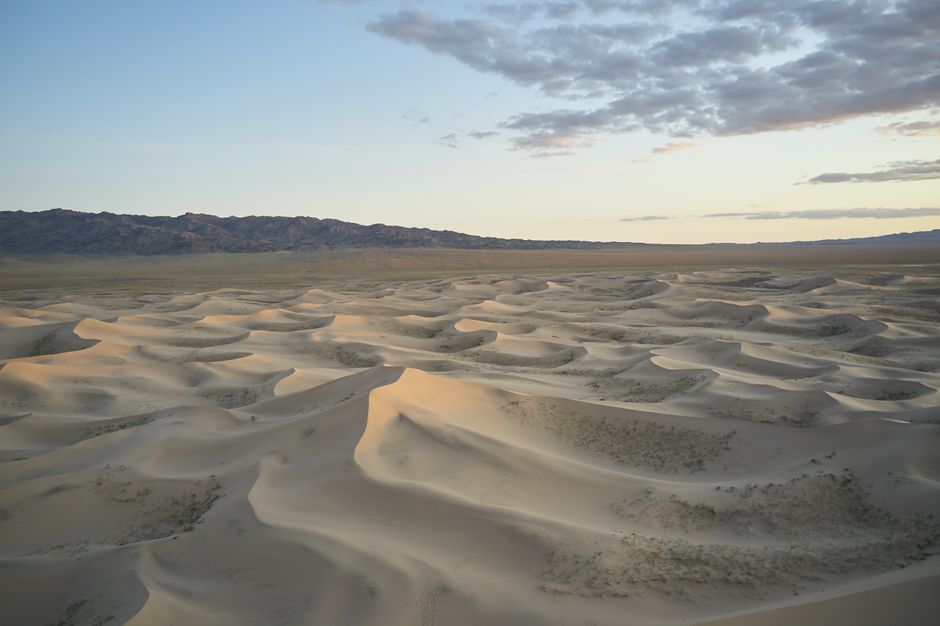
Khongoryn Els — the Singing Dunes — are the Gobi's most dramatic landscape: a 180-kilometre arc of sand mountains rising to 300 metres, so named because the shifting sand emits a deep, resonant hum under the right wind conditions. Climbing to the dune crest at sunset, with nothing but ochre ridges and blue sky in every direction, is one of the defining experiences of travel in Central Asia. Between the dunes and the cliffs, Bactrian camels graze in sheltered saxaul valleys, tended by nomadic herders whose families have worked the Gobi routes for generations.
Your Gobi Desert Journey
A day-by-day breakdown of your adventure — follow the road to discover what awaits at every stop.

 Day 1
Day 1Flaming Cliffs of Bayanzag
Fly or drive from Ulaanbaatar to the Gobi. Arrive at the Flaming Cliffs of Bayanzag in the late afternoon, when the eroded red sandstone glows most brilliantly in the angled sun. Walk the cliff edge with a palaeontologist guide who explains the fossil-bearing layers and the story of Andrews' 1923 expedition. Search for small fossil fragments on the surface.
- Watch the Flaming Cliffs turn deep crimson in the late afternoon light
- Learn about the first dinosaur egg discovery with a palaeontology guide
- Search the surface for fossilised bone fragments and ancient shells
- Photograph the vast red-and-orange landscape from the cliff edge at sunset
Day 1Flaming Cliffs of Bayanzag
Fly or drive from Ulaanbaatar to the Gobi. Arrive at the Flaming Cliffs of Bayanzag in the late afternoon, when the eroded red sandstone glows most brilliantly in the angled sun. Walk the cliff edge with a palaeontologist guide who explains the fossil-bearing layers and the story of Andrews' 1923 expedition. Search for small fossil fragments on the surface.
- Watch the Flaming Cliffs turn deep crimson in the late afternoon light
- Learn about the first dinosaur egg discovery with a palaeontology guide
- Search the surface for fossilised bone fragments and ancient shells
- Photograph the vast red-and-orange landscape from the cliff edge at sunset
 Day 2
Day 2Camel Trek & Nomadic Ger
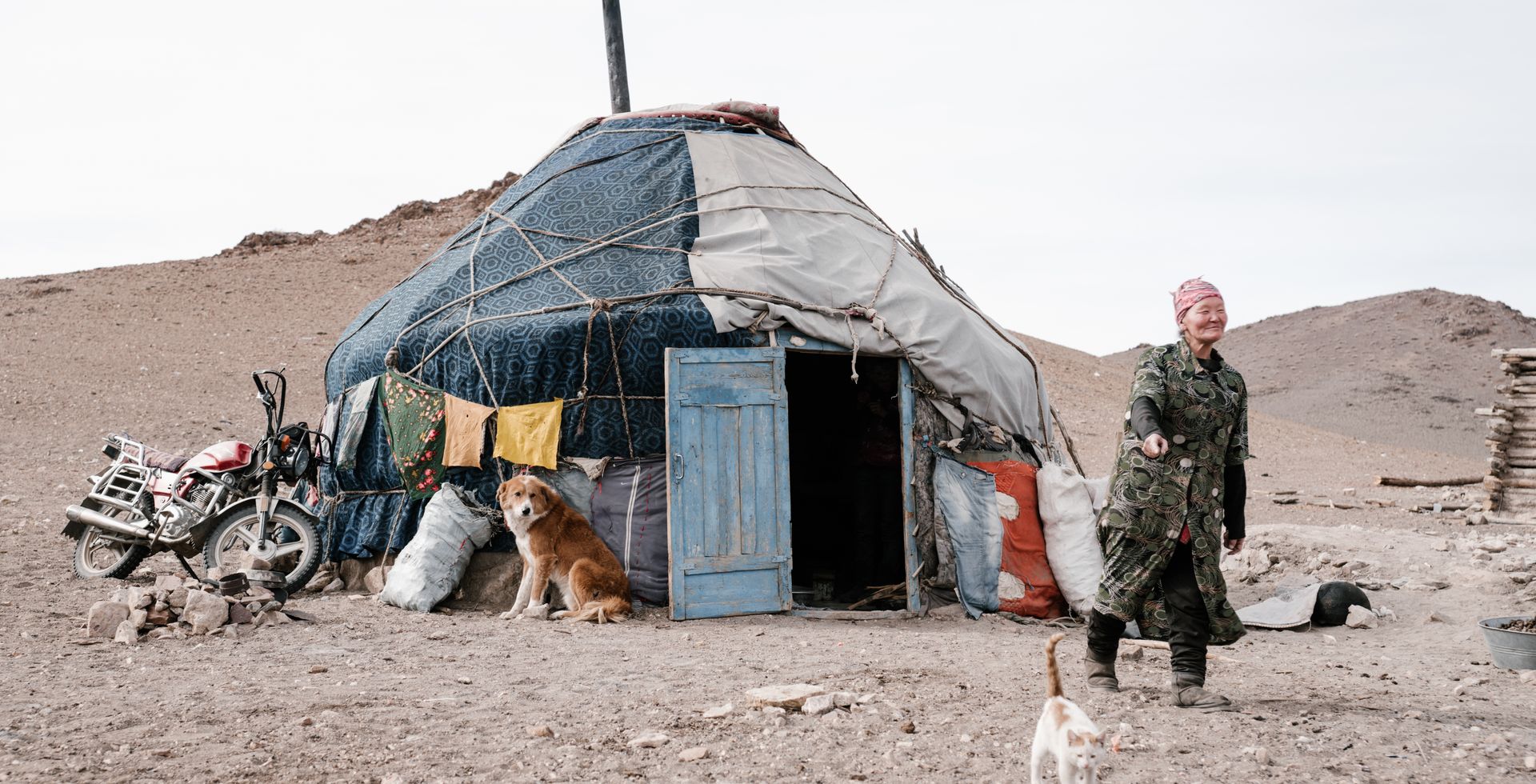
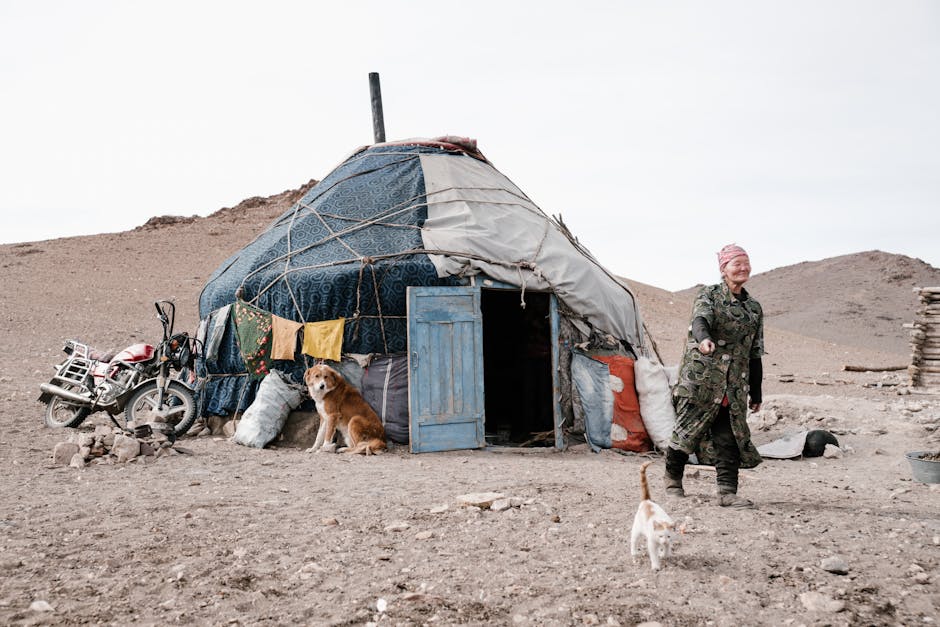
Mount a two-humped Bactrian camel for a half-day trek across the stone desert, guided by a nomadic herder whose family has worked these routes for generations. Visit their ger for airag, fresh cheese curds, and buuz dumplings. As darkness falls, step outside for a Gobi stargazing experience — zero light pollution, the Milky Way reflected in the silence of the desert.
- Ride a Bactrian camel across the Gobi stone plains for half a day
- Visit a nomadic herder's ger and taste airag, dried curd, and fresh mutton soup
- Watch the desert sunset from camelback in the vast stone plateau
- Stargaze from the Gobi under one of the world's darkest skies
Day 2Camel Trek & Nomadic Ger
Mount a two-humped Bactrian camel for a half-day trek across the stone desert, guided by a nomadic herder whose family has worked these routes for generations. Visit their ger for airag, fresh cheese curds, and buuz dumplings. As darkness falls, step outside for a Gobi stargazing experience — zero light pollution, the Milky Way reflected in the silence of the desert.
- Ride a Bactrian camel across the Gobi stone plains for half a day
- Visit a nomadic herder's ger and taste airag, dried curd, and fresh mutton soup
- Watch the desert sunset from camelback in the vast stone plateau
- Stargaze from the Gobi under one of the world's darkest skies
 Day 3
Day 3Khongoryn Els — The Singing Dunes
Drive to Khongoryn Els, Mongolia's largest sand dune system — a 180-kilometre arc of orange sand mountains up to 300 metres high. Climb the highest crest on foot or by camel, listening for the low resonant hum the dunes emit when wind moves the sand at the right angle. Slide back down and cool off in the cold springs at the dune base.
- Climb to the crest of a 300-metre sand mountain rising from flat desert
- Hear the 'singing' hum of the dunes as the wind shifts the sand
- Photograph the infinite dune ridges in blue-gold early morning light
- Cool off in the cold freshwater spring that runs at the base of the dunes
Day 3Khongoryn Els — The Singing Dunes
Drive to Khongoryn Els, Mongolia's largest sand dune system — a 180-kilometre arc of orange sand mountains up to 300 metres high. Climb the highest crest on foot or by camel, listening for the low resonant hum the dunes emit when wind moves the sand at the right angle. Slide back down and cool off in the cold springs at the dune base.
- Climb to the crest of a 300-metre sand mountain rising from flat desert
- Hear the 'singing' hum of the dunes as the wind shifts the sand
- Photograph the infinite dune ridges in blue-gold early morning light
- Cool off in the cold freshwater spring that runs at the base of the dunes
 Day 4
Day 4Yol Valley Ice Canyon
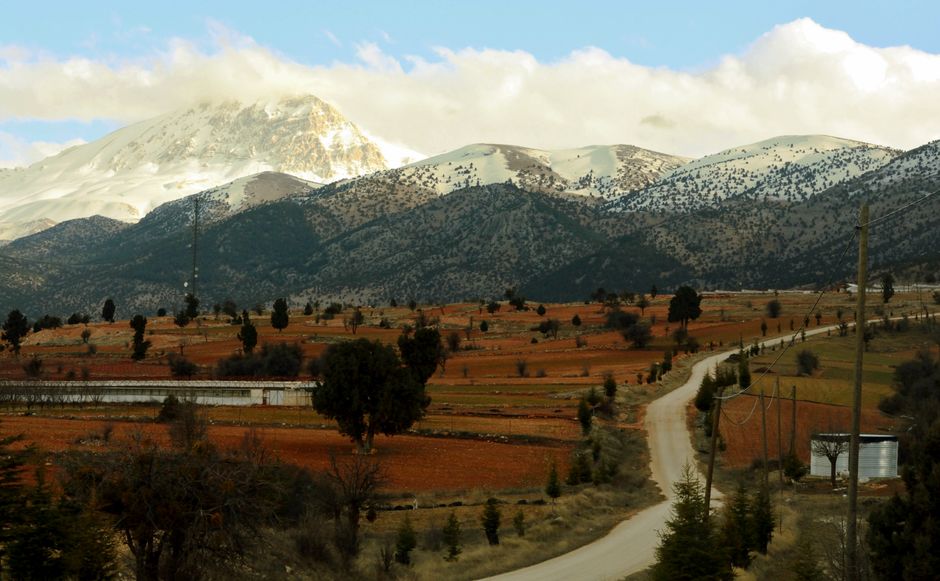
Drive to the Gurvan Saikhan Mountains — an unexpected oasis of green in the heart of the Gobi. Hike into Yol Valley, a deep gorge whose sheer walls block sunlight, allowing a wall of ice to persist well into summer. Spot Mongolian lammergeier vultures riding thermals above the cliff walls, and look for ibex on the rocky slopes above.
- Hike into Yol Valley's deep gorge to find a wall of ice in the middle of the desert
- Spot lammergeier bearded vultures soaring on thermals above the canyon walls
- Search the rocky slopes for Mongolian ibex and Argali wild sheep
- Picnic in the unexpected greenery of the Gurvan Saikhan Mountain oasis
Day 4Yol Valley Ice Canyon
Drive to the Gurvan Saikhan Mountains — an unexpected oasis of green in the heart of the Gobi. Hike into Yol Valley, a deep gorge whose sheer walls block sunlight, allowing a wall of ice to persist well into summer. Spot Mongolian lammergeier vultures riding thermals above the cliff walls, and look for ibex on the rocky slopes above.
- Hike into Yol Valley's deep gorge to find a wall of ice in the middle of the desert
- Spot lammergeier bearded vultures soaring on thermals above the canyon walls
- Search the rocky slopes for Mongolian ibex and Argali wild sheep
- Picnic in the unexpected greenery of the Gurvan Saikhan Mountain oasis
 Day 5
Day 5Ongi Monastery Ruins & Return
Stop at the ruins of Ongi Monastery on the journey back north — once the largest monastery complex in Mongolia with 27 temples and 1,000 monks, destroyed in the Soviet purges of 1937. The remaining stone foundations and reconstructed temples overlook the Ongi River, and the silence of the site carries a profound weight of history.
- Walk the ruined foundations of what was once Mongolia's greatest monastic complex
- Visit the small reconstructed temple where monks have begun to return
- Photograph the Ongi River valley where saxaul trees and wild horses gather
- Reflect on the 1937 Soviet purges that destroyed Mongolia's Buddhist heritage
Day 5Ongi Monastery Ruins & Return
Stop at the ruins of Ongi Monastery on the journey back north — once the largest monastery complex in Mongolia with 27 temples and 1,000 monks, destroyed in the Soviet purges of 1937. The remaining stone foundations and reconstructed temples overlook the Ongi River, and the silence of the site carries a profound weight of history.
- Walk the ruined foundations of what was once Mongolia's greatest monastic complex
- Visit the small reconstructed temple where monks have begun to return
- Photograph the Ongi River valley where saxaul trees and wild horses gather
- Reflect on the 1937 Soviet purges that destroyed Mongolia's Buddhist heritage
Top Things to Do in Gobi Desert
Bactrian Camel Trek
Ride two-humped Bactrian camels across the Gobi stone desert, guided by nomadic herders who have worked these ancient routes for generations.
Flaming Cliffs Fossil Hunt
Walk the Bayanzag cliffs where the world's first dinosaur eggs were discovered in 1923, searching the surface for fossilised bone and shell.
Climbing Khongoryn Els Dunes
Scale the Singing Dunes — 300-metre sand mountains that emit a haunting hum when the wind shifts — for panoramic views of the endless Gobi.
Nomadic Ger Homestay
Sleep in a Gobi herder's ger, sharing meals, stories, and the extraordinary silence of one of the world's least populated landscapes.
Desert Stargazing
Lie back on the gravel plain under the Gobi's zero-light-pollution sky — the Milky Way is so dense it casts a faint shadow on clear nights.
Yol Valley Ice Hike
Hike into the deep ice canyon of Yol Valley in the Gurvan Saikhan Mountains, where ice persists in the gorge even through the height of summer.
Essential Tips for Gobi Desert
Know before you go — practical advice to make your trip smooth and memorable.
A 4WD vehicle with a driver-guide is essential — there are no paved roads in the Gobi and distances between sites are huge; plan a full multi-day circuit.
May–June and September–October are best — summer (July–August) can exceed 40 °C and driving across stone plains becomes physically gruelling.
Carry significantly more water than you think you need — desert dehydration happens faster than expected and water sources are scarce.
Book ger camp accommodation in advance for the peak season; basic shared facilities are the norm, and that is part of the authentic experience.
Bring layers for the night — even in summer, Gobi nights drop dramatically in temperature (down to single digits) after the intense daytime heat.
Respect fossil sites — removing any fossil material from Bayanzag or the Gobi is illegal and culturally disrespectful to Mongolian heritage.
Bring offline maps and a satellite communicator — mobile network coverage is essentially zero across most of the Gobi.
Ready to Explore Gobi Desert?
Share your ideal trip details and our team will customize the perfect itinerary for you.
Call us
+91 98765 43210
Tour Duration
4 Nights / 5 Days