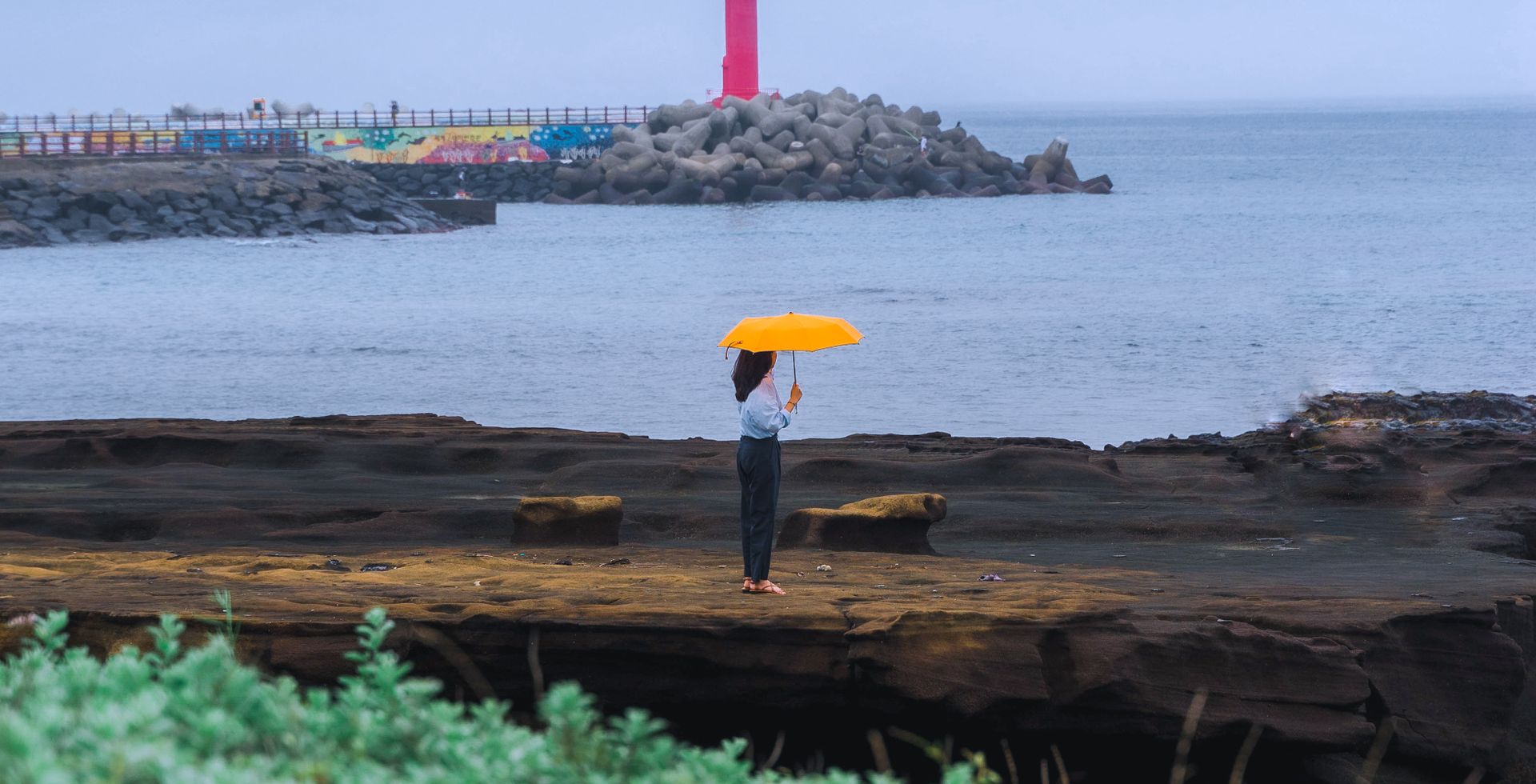
Jeju Island
Volcanic landscapes, tangerine farms, coastal trails
Capital
Jeju City
Currency
South Korean Won (₩)
Climate
Humid subtropical with mild winters and warm, rainy summers
Best Season
April–June (wildflowers and canola bloom) & September–November (clear skies)
Languages
Korean (Jeju dialect)
Time Zone
KST (UTC+9)
Driving Side
Right
Everything You Need to Know
Jeju Island rises from the Korea Strait like a geological theme park — a volcanic wonderland of lava tubes, crater lakes, columnar basalt cliffs, and a dormant shield volcano capped by South Korea's highest peak. Known as the 'Hawaii of Korea,' Jeju draws honeymooners, hikers, and divers to its subtropical shores, but it is the island's raw natural drama and deeply rooted folk culture that truly set it apart from any tropical beach destination.
The island revolves around Hallasan, the 1,950-meter volcano whose crater lake, Baengnokdam, fills with snow in winter and wildflowers in spring. The Jeju Olle Trail — 425 kilometers of coastal and mountain paths divided into 26 routes — is one of Asia's great long-distance walks, winding past black-lava shorelines, wind-battered rape-flower fields, and villages where haenyeo — Jeju's legendary female free-divers — still plunge to the seabed for abalone and sea urchin without oxygen tanks, a UNESCO-recognized tradition.
Jeju's food culture draws on its volcanic soil and surrounding ocean. Tangerines grow in groves so abundant they perfume entire roadsides in autumn. Black pork — raised on the island's mineral-rich pastures — is grilled thick-cut over charcoal at Jeju City's Dongmun Market, while raw abalone porridge and sea-urchin bibimbap connect every meal to the island's maritime soul.
Your Jeju Island Journey
A day-by-day breakdown of your adventure — follow the road to discover what awaits at every stop.

 Day 1
Day 1Jeju City & Dongmun Market
Arrive at Jeju International Airport and head straight to Dongmun Market, the island's largest traditional market, where stalls pile high with fresh tangerines, black-pork skewers, and bowls of raw-abalone porridge. Explore the old town's stone-wall streets before watching the sunset from Yongduam Dragon Head Rock.
- Feast on grilled black pork and abalone porridge at Dongmun Market
- Walk Jeju City's old-town stone-wall alleys
- Watch sunset at Yongduam Dragon Head Rock formation
- Sample hallabong tangerine juice and tangerine chocolate
Day 1Jeju City & Dongmun Market
Arrive at Jeju International Airport and head straight to Dongmun Market, the island's largest traditional market, where stalls pile high with fresh tangerines, black-pork skewers, and bowls of raw-abalone porridge. Explore the old town's stone-wall streets before watching the sunset from Yongduam Dragon Head Rock.
- Feast on grilled black pork and abalone porridge at Dongmun Market
- Walk Jeju City's old-town stone-wall alleys
- Watch sunset at Yongduam Dragon Head Rock formation
- Sample hallabong tangerine juice and tangerine chocolate
 Day 2
Day 2Hallasan Volcano Summit
Set out early on the Seongpanak Trail for the 9-kilometer ascent of Hallasan, South Korea's highest peak. The trail climbs through temperate forest, subalpine scrub, and finally bare volcanic rock to the crater rim, where Baengnokdam — the White Deer Lake — shimmers in an ancient caldera.
- Summit South Korea's highest peak at 1,950 meters
- Gaze into the Baengnokdam crater lake
- Pass through four distinct vegetation zones on the ascent
- Celebrate with a hearty bowl of Jeju pheasant noodle soup
Day 2Hallasan Volcano Summit
Set out early on the Seongpanak Trail for the 9-kilometer ascent of Hallasan, South Korea's highest peak. The trail climbs through temperate forest, subalpine scrub, and finally bare volcanic rock to the crater rim, where Baengnokdam — the White Deer Lake — shimmers in an ancient caldera.
- Summit South Korea's highest peak at 1,950 meters
- Gaze into the Baengnokdam crater lake
- Pass through four distinct vegetation zones on the ascent
- Celebrate with a hearty bowl of Jeju pheasant noodle soup
 Day 3
Day 3Manjanggul Lava Tube & Seongsan Ilchulbong
Descend into the Manjanggul Lava Tube, a 7.4-kilometer UNESCO-listed cavern formed 300,000 years ago, where a 7-meter lava column stands frozen mid-flow. Drive to Seongsan Ilchulbong — the Sunrise Peak — a volcanic tuff cone rising from the ocean, and hike its short, steep trail for views of the crater and the coastline.
- Walk 1 kilometer into Manjanggul's illuminated lava tube
- See the world's tallest known lava column
- Hike Seongsan Ilchulbong for ocean-and-crater panoramas
- Watch haenyeo free-divers surface with their catch nearby
Day 3Manjanggul Lava Tube & Seongsan Ilchulbong
Descend into the Manjanggul Lava Tube, a 7.4-kilometer UNESCO-listed cavern formed 300,000 years ago, where a 7-meter lava column stands frozen mid-flow. Drive to Seongsan Ilchulbong — the Sunrise Peak — a volcanic tuff cone rising from the ocean, and hike its short, steep trail for views of the crater and the coastline.
- Walk 1 kilometer into Manjanggul's illuminated lava tube
- See the world's tallest known lava column
- Hike Seongsan Ilchulbong for ocean-and-crater panoramas
- Watch haenyeo free-divers surface with their catch nearby
Day 4Jeju Olle Trail & Jungmun Coast
Walk a section of the Jeju Olle Trail along the southern coast, passing columnar basalt cliffs at Jungmun Daepo, the Cheonjeyeon triple waterfall, and fields of bright-yellow canola flowers in spring. End at Jungmun Beach, where the black volcanic sand meets turquoise surf.
- Hike the Olle Trail along Jungmun's columnar basalt coastline
- Visit the three-tiered Cheonjeyeon Waterfall
- Swim at Jungmun's striking black-sand beach
- Evening seafood barbecue at a beachside restaurant
Day 4Jeju Olle Trail & Jungmun Coast
Walk a section of the Jeju Olle Trail along the southern coast, passing columnar basalt cliffs at Jungmun Daepo, the Cheonjeyeon triple waterfall, and fields of bright-yellow canola flowers in spring. End at Jungmun Beach, where the black volcanic sand meets turquoise surf.
- Hike the Olle Trail along Jungmun's columnar basalt coastline
- Visit the three-tiered Cheonjeyeon Waterfall
- Swim at Jungmun's striking black-sand beach
- Evening seafood barbecue at a beachside restaurant
 Day 5
Day 5Tangerine Farm & Departure
Visit a tangerine orchard for a hands-on picking experience — Jeju produces 99% of South Korea's tangerines — and taste varieties you won't find on the mainland. Stop at the Osulloc Tea Museum, set amid lush green-tea fields, for a matcha latte overlooking the plantation before heading to the airport.
- Pick tangerines at a family-run orchard in the western hills
- Taste rare hallabong and cheonhyehyang citrus varieties
- Visit Osulloc Tea Museum amid emerald-green tea fields
- Final purchase of tangerine cosmetics and black-pork jerky
Day 5Tangerine Farm & Departure
Visit a tangerine orchard for a hands-on picking experience — Jeju produces 99% of South Korea's tangerines — and taste varieties you won't find on the mainland. Stop at the Osulloc Tea Museum, set amid lush green-tea fields, for a matcha latte overlooking the plantation before heading to the airport.
- Pick tangerines at a family-run orchard in the western hills
- Taste rare hallabong and cheonhyehyang citrus varieties
- Visit Osulloc Tea Museum amid emerald-green tea fields
- Final purchase of tangerine cosmetics and black-pork jerky
Top Things to Do in Jeju Island
Hallasan Volcano Hike
Conquer South Korea's highest peak and peer into the crater lake atop a dormant shield volcano — a full-day trek through four climate zones.
Haenyeo Diving Culture
Watch Jeju's legendary female free-divers surface with abalone and sea urchin, then taste their catch at a shoreside haenyeo restaurant.
Olle Trail Coastal Walk
Follow a section of the 425-kilometer trail along black-lava coastlines, through tangerine groves, and past wind-sculpted canola fields.
Black Pork BBQ
Grill thick-cut Jeju black pork over charcoal at Dongmun Market, wrapping each slice in perilla leaf with raw garlic and doenjangjjigae.
Lava Tube Exploration
Walk deep into the Manjanggul UNESCO lava tube, a 300,000-year-old underground cavern with towering lava columns and alien rock formations.
Tangerine Orchard Visit
Pick fresh tangerines from the tree at a family orchard and taste rare island varieties like the bumpy hallabong and fragrant cheonhyehyang.
Essential Tips for Jeju Island
Know before you go — practical advice to make your trip smooth and memorable.
Rent a car — Jeju's attractions are spread across the island and public transport, while available, is infrequent outside Jeju City.
An International Driving Permit is required for foreigners renting vehicles on Jeju.
Start the Hallasan hike before 6 a.m. in summer; park rangers enforce cut-off times and turn back late starters.
Jeju's weather changes rapidly — pack layers and rain gear even on sunny mornings.
Many Jeju restaurants specialize in a single dish; ask locals for their favorite haenyeo restaurant or black-pork spot rather than relying on tourist guides.
Buy tangerine products (chocolate, cosmetics, tea) at the airport duty-free — prices are competitive and packaging is gift-ready.
Jeju is visa-free for many nationalities even when mainland Korea requires a visa — check the latest entry requirements before booking.
Ready to Explore Jeju Island?
Share your ideal trip details and our team will customize the perfect itinerary for you.
Call us
+91 98765 43210
Tour Duration
4 Nights / 5 Days