Luxor
The world's greatest open-air museum, where pharaohs built for eternity
Capital
Cairo
Currency
Egyptian Pound (EGP)
Climate
Hot desert with scorching summers and warm, dry winters; rain is extremely rare
Best Season
October–April (cooler temperatures for temple exploration)
Languages
Arabic, English in tourist areas
Time Zone
EET (UTC+2)
Driving Side
Right
Everything You Need to Know
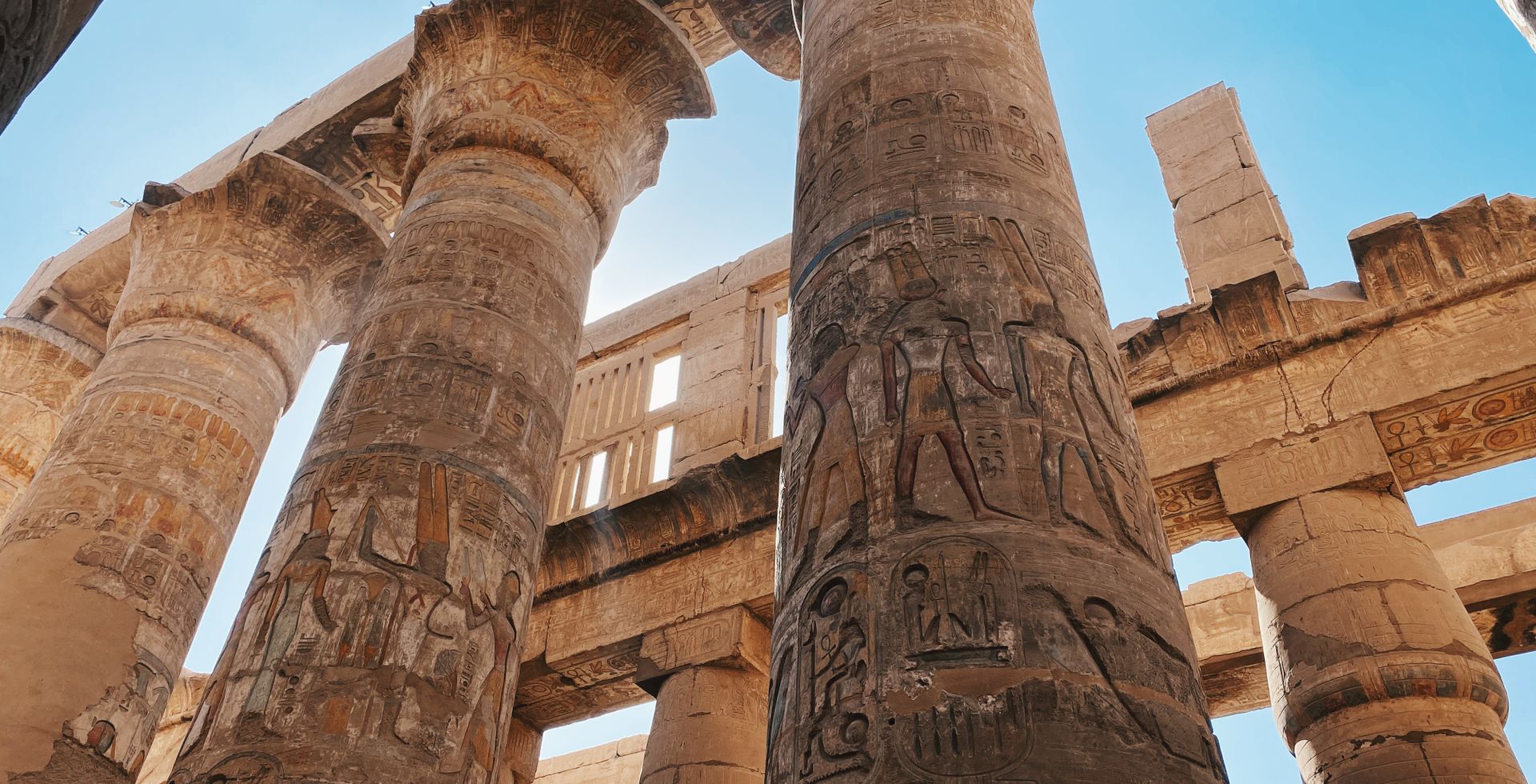
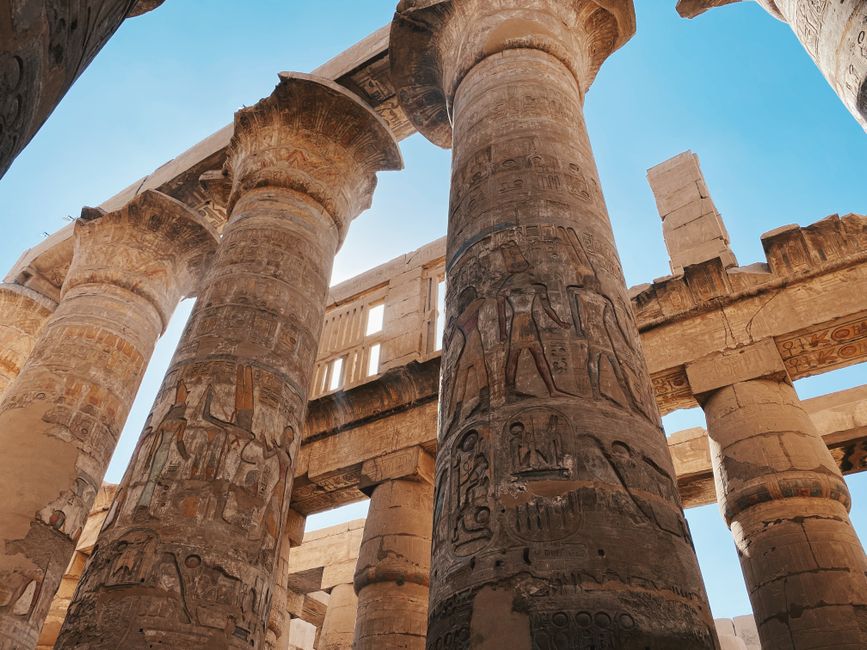
Luxor is ancient Thebes reborn — a city bisected by the Nile into the East Bank of the living and the West Bank of the dead, where the sheer density of monumental ruins surpasses any archaeological site on Earth. On the East Bank, the Karnak Temple Complex sprawls across 200 acres of hypostyle halls, obelisks, and sacred lakes — its Great Hypostyle Hall alone contains 134 columns, each 23 metres tall, carved with hieroglyphs that have survived 3,300 years of sun and sand.
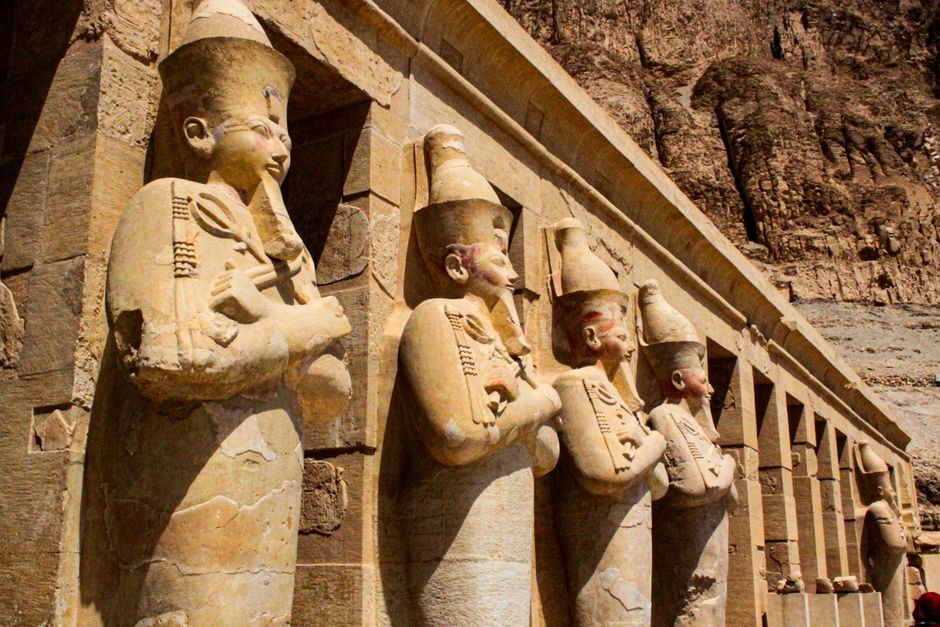
Cross the Nile at dawn and the West Bank reveals the Valley of the Kings, where 63 pharaonic tombs burrow deep into the limestone cliffs. Tutankhamun's tomb, though small, still resonates with gold-painted walls and the young king's stone sarcophagus. Nearby, the mortuary temple of Hatshepsut rises in three terraced colonnades against a sheer cliff — Egypt's most elegant architectural statement — while the Colossi of Memnon, two 18-metre seated pharaohs, stand sentinel over the floodplain.
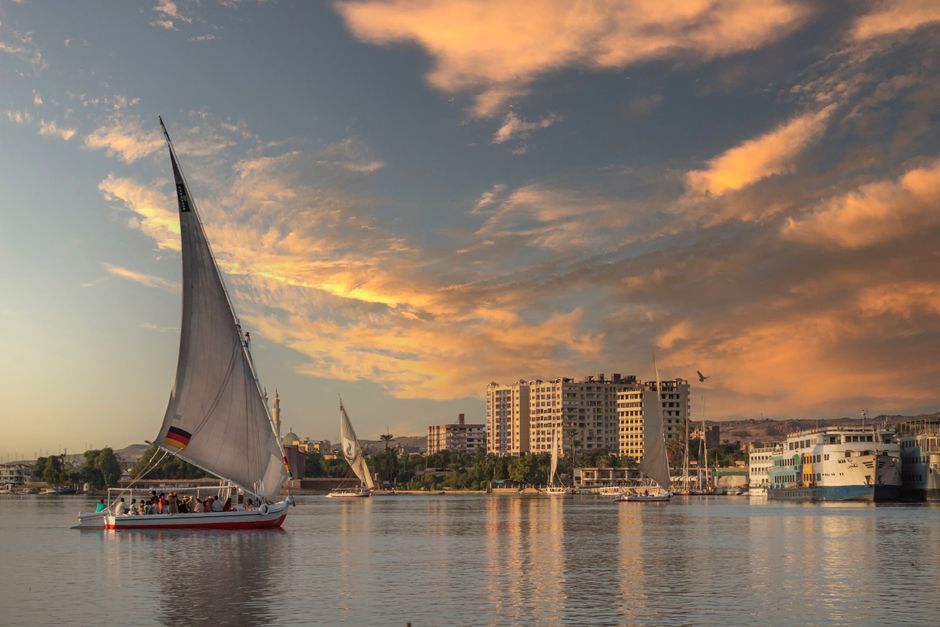
Luxor rewards slowness: a felucca sail at sunset, when the river turns molten gold and the call to prayer drifts from East Bank minarets; a hot air balloon ride at dawn over the West Bank temples; a horse-drawn caleche clip-clopping down the Corniche. This is not a city that preserves the past — it is a city where the past has never left.
Your Luxor Journey
A day-by-day breakdown of your adventure — follow the road to discover what awaits at every stop.

 Day 1
Day 1Karnak Temple & Luxor Temple by Night
Arrive on the East Bank and enter Karnak Temple in the late afternoon, when the low sun ignites the sandstone columns in amber. Walk the Avenue of Sphinxes — recently restored — the 2.7-kilometre processional road linking Karnak to Luxor Temple. Return after dark for the Sound and Light Show that illuminates the Great Hypostyle Hall.
- Walk among the 134 towering columns of Karnak's Great Hypostyle Hall
- Stroll the restored 2.7 km Avenue of Sphinxes between Karnak and Luxor Temple
- Photograph the obelisk of Hatshepsut, the tallest surviving in Egypt
- Watch the Sound and Light Show illuminate the temple ruins after dark
Day 1Karnak Temple & Luxor Temple by Night
Arrive on the East Bank and enter Karnak Temple in the late afternoon, when the low sun ignites the sandstone columns in amber. Walk the Avenue of Sphinxes — recently restored — the 2.7-kilometre processional road linking Karnak to Luxor Temple. Return after dark for the Sound and Light Show that illuminates the Great Hypostyle Hall.
- Walk among the 134 towering columns of Karnak's Great Hypostyle Hall
- Stroll the restored 2.7 km Avenue of Sphinxes between Karnak and Luxor Temple
- Photograph the obelisk of Hatshepsut, the tallest surviving in Egypt
- Watch the Sound and Light Show illuminate the temple ruins after dark
 Day 2
Day 2Valley of the Kings & Hatshepsut's Temple
Cross the Nile at dawn to the West Bank. Descend into the painted tombs of the Valley of the Kings — Ramesses VI's astronomical ceiling and Seti I's vivid reliefs are among the most spectacular. Visit the terraced mortuary temple of Hatshepsut at Deir el-Bahari, then pause at the Colossi of Memnon.
- Enter the tomb of Ramesses VI with its breathtaking astronomical ceiling
- Stand inside Tutankhamun's burial chamber in the Valley of the Kings
- Admire Hatshepsut's temple rising in three elegant terraces against the cliff
- Photograph the twin 18-metre Colossi of Memnon at the floodplain edge
Day 2Valley of the Kings & Hatshepsut's Temple
Cross the Nile at dawn to the West Bank. Descend into the painted tombs of the Valley of the Kings — Ramesses VI's astronomical ceiling and Seti I's vivid reliefs are among the most spectacular. Visit the terraced mortuary temple of Hatshepsut at Deir el-Bahari, then pause at the Colossi of Memnon.
- Enter the tomb of Ramesses VI with its breathtaking astronomical ceiling
- Stand inside Tutankhamun's burial chamber in the Valley of the Kings
- Admire Hatshepsut's temple rising in three elegant terraces against the cliff
- Photograph the twin 18-metre Colossi of Memnon at the floodplain edge
 Day 3
Day 3Hot Air Balloon & Medinet Habu
Rise before dawn for a hot air balloon flight over the West Bank, watching temples, tombs, and the Nile unfold in the golden first light. After landing, explore Medinet Habu — the mortuary temple of Ramesses III — whose vivid colour relief is the best-preserved of any Luxor temple.
- Float over the Valley of the Kings and Hatshepsut's Temple at sunrise by balloon
- Explore the vividly coloured reliefs of Medinet Habu, often overlooked by crowds
- Visit the Valley of the Queens and the tomb of Nefertari (if open)
- Lunch at a rooftop restaurant overlooking the Nile and the Theban hills
Day 3Hot Air Balloon & Medinet Habu
Rise before dawn for a hot air balloon flight over the West Bank, watching temples, tombs, and the Nile unfold in the golden first light. After landing, explore Medinet Habu — the mortuary temple of Ramesses III — whose vivid colour relief is the best-preserved of any Luxor temple.
- Float over the Valley of the Kings and Hatshepsut's Temple at sunrise by balloon
- Explore the vividly coloured reliefs of Medinet Habu, often overlooked by crowds
- Visit the Valley of the Queens and the tomb of Nefertari (if open)
- Lunch at a rooftop restaurant overlooking the Nile and the Theban hills
 Day 4
Day 4Felucca Sail & Banana Island
Spend a leisurely morning sailing the Nile on a traditional felucca, passing palm-fringed banks and buffalo wading in the shallows. Stop at Banana Island, a lush plantation where you can taste fresh bananas, sugarcane juice, and hibiscus tea. Return at sunset as the East Bank skyline turns to silhouette.
- Sail a traditional felucca as the Nile turns molten gold at sunset
- Visit Banana Island for fresh sugarcane juice and tropical fruit
- Watch buffalo and egrets along the palm-fringed riverbanks
- Sip hibiscus tea (karkade) on deck as the call to prayer echoes from shore
Day 4Felucca Sail & Banana Island
Spend a leisurely morning sailing the Nile on a traditional felucca, passing palm-fringed banks and buffalo wading in the shallows. Stop at Banana Island, a lush plantation where you can taste fresh bananas, sugarcane juice, and hibiscus tea. Return at sunset as the East Bank skyline turns to silhouette.
- Sail a traditional felucca as the Nile turns molten gold at sunset
- Visit Banana Island for fresh sugarcane juice and tropical fruit
- Watch buffalo and egrets along the palm-fringed riverbanks
- Sip hibiscus tea (karkade) on deck as the call to prayer echoes from shore
Top Things to Do in Luxor
Valley of the Kings
Descend into pharaonic tombs adorned with astronomical ceilings, vivid murals, and hieroglyphic spells from the Book of the Dead.
Hot Air Balloon at Sunrise
Float over the West Bank temples and the Nile at dawn, watching 3,000 years of history unfold from above.
Karnak Temple Exploration
Walk the Great Hypostyle Hall's 134 colossal columns and trace 2,000 years of pharaonic construction across the vast complex.
Felucca Sailing
Glide down the Nile on a lateen-rigged felucca, watching the sun set behind the Theban hills as egrets take flight.
Egyptian Street Food
Feast on koshari (lentils, rice, and crispy onions), foul medames, and freshly baked aish baladi from Luxor's street stalls.
Sound & Light Show
Watch Karnak Temple come alive after dark as coloured lights and narration recount the story of Thebes across the ancient stones.
Essential Tips for Luxor
Know before you go — practical advice to make your trip smooth and memorable.
Visit the Valley of the Kings first thing in the morning — by 10 AM the tombs become stifling and crowded.
Your standard ticket covers 3 tombs; Tutankhamun, Seti I, and Nefertari require separate, pricier tickets — they're worth it.
Hire a licensed guide for the West Bank — the stories behind the reliefs transform the experience.
Bargain hard with caleche (horse carriage) drivers and agree a round-trip price before boarding.
Carry small bills (EGP 10–20) for baksheesh (tips) to tomb guards and boat crew.
Drink at least 3 litres of water per day and wear a hat — Luxor regularly exceeds 40 °C in summer.
The restored Avenue of Sphinxes is best walked at sunset, when it's cooler and dramatically lit.
Ready to Explore Luxor?
Share your ideal trip details and our team will customize the perfect itinerary for you.
Call us
+91 98765 43210
Tour Duration
3 Nights / 4 Days