Ulaanbaatar
Nomadic culture meets modern capital — Genghis Khan Square, Buddhist temples, and vibrant markets
Capital
Ulaanbaatar
Currency
Mongolian Tögrög (₮ / MNT)
Climate
Extreme continental — harsh winters (–25 °C), warm dry summers (25 °C); dusty springs
Best Season
June–August (Naadam Festival in July; warmest, greenest steppe)
Languages
Mongolian
Time Zone
ULAT (UTC+8)
Driving Side
Right
Everything You Need to Know
Ulaanbaatar is the world's coldest capital city and one of its most unexpected. Perched at 1,350 metres on the Tuul River floodplain, surrounded by the Bogd Khan mountain sacred forest, it is home to nearly half of Mongolia's entire population — a sprawling mix of Soviet apartment blocks, traditional ger districts, gleaming glass towers, and ancient Buddhist monasteries that somehow coexist in a city still finding its modern identity.
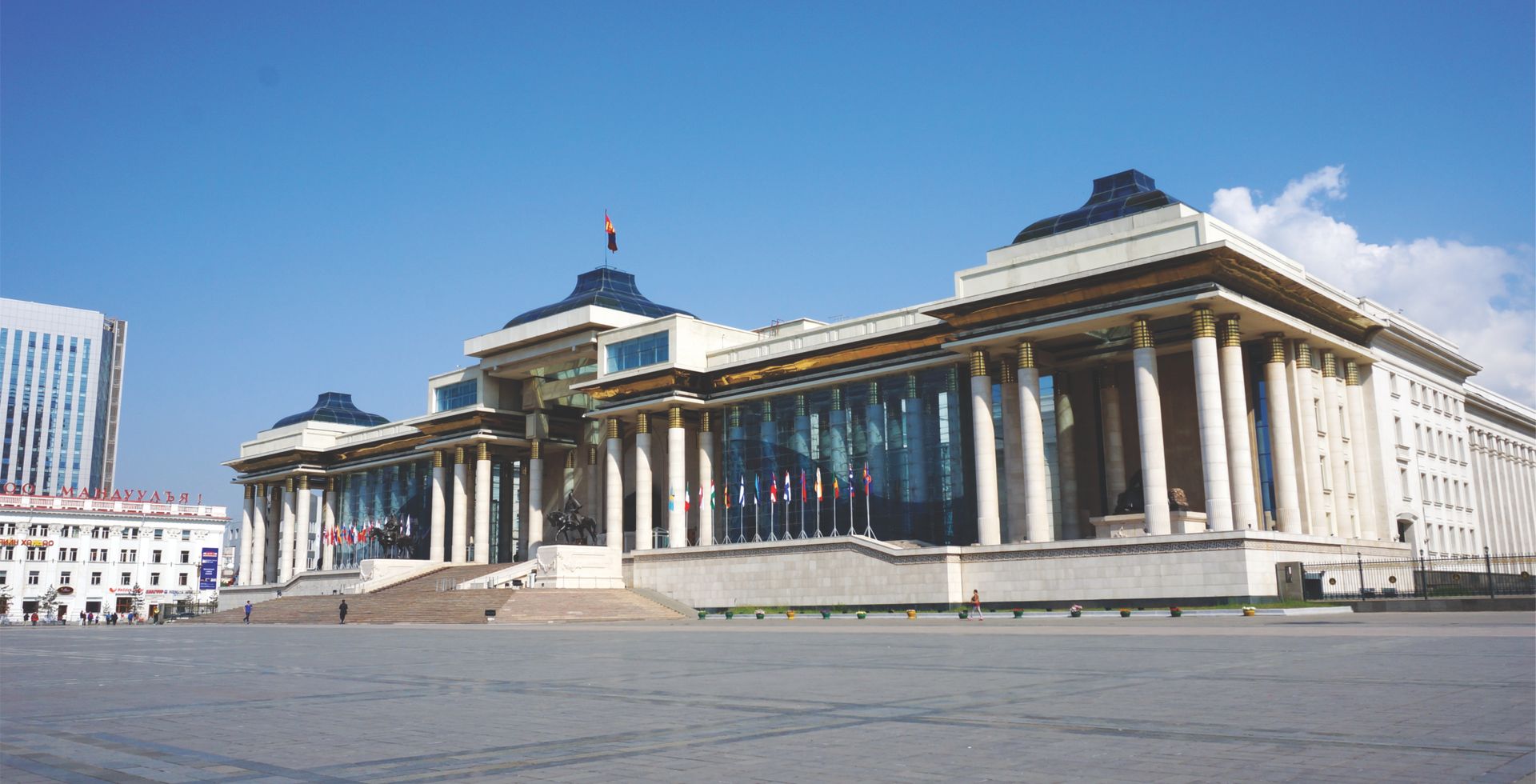
At its centre lies Sükhbaatar Square — renamed Genghis Khan Square in 2013 — dominated by a monumental bronze statue of the Great Khan flanked by his generals, seated before the neoclassical Government Palace. From here the city fans out in every direction: west to the Gandantegchinlen Monastery, Mongolia's spiritual heart and home to an 26-metre gilded standing Buddha; north to the Zaisan Memorial hill with its panoramic city views; and east to the lively Naran Tuul Black Market, where everything from camel-hair blankets to Soviet military medals changes hands.
But Ulaanbaatar is also a gateway — to the vast steppe beyond the city limits where nomadic herders still live in circular felt gers, tend their horses, and read the landscape for signs of weather. A single day's drive south brings you to the edge of the Gobi Desert; north lie the pine-forested Khangai Mountains. The city serves as both a vibrant cultural destination and the launch point for some of the most extraordinary wilderness adventures on Earth.
Your Ulaanbaatar Journey
A day-by-day breakdown of your adventure — follow the road to discover what awaits at every stop.

 Day 1
Day 1Genghis Khan Square & National Museum
Start at Sükhbaatar (Genghis Khan) Square to take in the monumental bronze statues of the Great Khan and his generals. Enter the Government Palace colonnade, then cross to the National Museum of Mongolia, where three floors of exhibits trace Mongolian history from Neolithic stone tools through the conquests of the Mongol Empire to Soviet-era art and contemporary life.
- Photograph the monumental Genghis Khan statue at the Government Palace
- Trace 5,000 years of Mongolian history in the National Museum
- See original Mongol Empire armour, saddles, and royal seals
- Try buuz (steamed dumplings) at a downtown guanz (canteen) for lunch
Day 1Genghis Khan Square & National Museum
Start at Sükhbaatar (Genghis Khan) Square to take in the monumental bronze statues of the Great Khan and his generals. Enter the Government Palace colonnade, then cross to the National Museum of Mongolia, where three floors of exhibits trace Mongolian history from Neolithic stone tools through the conquests of the Mongol Empire to Soviet-era art and contemporary life.
- Photograph the monumental Genghis Khan statue at the Government Palace
- Trace 5,000 years of Mongolian history in the National Museum
- See original Mongol Empire armour, saddles, and royal seals
- Try buuz (steamed dumplings) at a downtown guanz (canteen) for lunch
 Day 2
Day 2Gandantegchinlen Monastery & Zaisan Hill
Visit Gandantegchinlen Monastery at dawn when monks chant morning prayers in crimson robes — one of Central Asia's most atmospheric religious experiences. Enter the main Migjid Janraisig Temple to stand before the 26-metre gilded standing Avalokitesvara statue. Afternoon, climb Zaisan Memorial hill for panoramic views over the city and its mountain backdrop.
- Attend dawn prayers at Gandantegchinlen with chanting monks in crimson robes
- Look up at the 26-metre gilded standing Buddha inside Migjid Janraisig Temple
- Climb Zaisan Memorial for sweeping views over Ulaanbaatar and Bogd Khan Mountain
- Photograph the circular Soviet-era mosaic panorama at Zaisan's summit
Day 2Gandantegchinlen Monastery & Zaisan Hill
Visit Gandantegchinlen Monastery at dawn when monks chant morning prayers in crimson robes — one of Central Asia's most atmospheric religious experiences. Enter the main Migjid Janraisig Temple to stand before the 26-metre gilded standing Avalokitesvara statue. Afternoon, climb Zaisan Memorial hill for panoramic views over the city and its mountain backdrop.
- Attend dawn prayers at Gandantegchinlen with chanting monks in crimson robes
- Look up at the 26-metre gilded standing Buddha inside Migjid Janraisig Temple
- Climb Zaisan Memorial for sweeping views over Ulaanbaatar and Bogd Khan Mountain
- Photograph the circular Soviet-era mosaic panorama at Zaisan's summit
 Day 3
Day 3Naadam Festival (July) or Nomadic Ger Stay
If visiting in July, experience Mongolia's Naadam Festival — the Three Manly Games of horse racing, archery, and wrestling, accompanied by throat singing and traditional costumes. Otherwise, drive 50 km from the city to spend the night in a nomadic family's ger, joining them for horse-milking, cooking, and an evening under the unpolluted steppe sky.
- Watch child jockeys as young as five race across the steppe in Naadam (July)
- Cheer at traditional Mongolian wrestling in the Naadam Stadium
- Drink airag (fermented mare's milk) poured by a nomadic host in their ger
- Sleep in a traditional felt ger to the sound of the wind across the open steppe
Day 3Naadam Festival (July) or Nomadic Ger Stay
If visiting in July, experience Mongolia's Naadam Festival — the Three Manly Games of horse racing, archery, and wrestling, accompanied by throat singing and traditional costumes. Otherwise, drive 50 km from the city to spend the night in a nomadic family's ger, joining them for horse-milking, cooking, and an evening under the unpolluted steppe sky.
- Watch child jockeys as young as five race across the steppe in Naadam (July)
- Cheer at traditional Mongolian wrestling in the Naadam Stadium
- Drink airag (fermented mare's milk) poured by a nomadic host in their ger
- Sleep in a traditional felt ger to the sound of the wind across the open steppe
 Day 4
Day 4Genghis Khan Equestrian Statue & Terelj
Drive 54 km east to the colossal 40-metre stainless steel Genghis Khan equestrian statue — the world's largest equestrian monument — rising from the open steppe. Climb inside to the horse's head observation deck. Continue into Terelj National Park for an afternoon of horse riding through granite boulder fields and pine-forested valleys.
- Stand at the base of the world's largest equestrian statue, 40 metres of stainless steel
- Take the elevator to the horse's head for a panorama of the open steppe
- Ride Mongolian horses through the extraordinary rock formations of Terelj
- Visit Aryabal Meditation Temple perched on a hilltop in Terelj National Park
Day 4Genghis Khan Equestrian Statue & Terelj
Drive 54 km east to the colossal 40-metre stainless steel Genghis Khan equestrian statue — the world's largest equestrian monument — rising from the open steppe. Climb inside to the horse's head observation deck. Continue into Terelj National Park for an afternoon of horse riding through granite boulder fields and pine-forested valleys.
- Stand at the base of the world's largest equestrian statue, 40 metres of stainless steel
- Take the elevator to the horse's head for a panorama of the open steppe
- Ride Mongolian horses through the extraordinary rock formations of Terelj
- Visit Aryabal Meditation Temple perched on a hilltop in Terelj National Park
 Day 5
Day 5Black Market & Farewell Dinner
Spend the morning at Naran Tuul Black Market — Central Asia's most eclectic bazaar, selling cashmere, camel wool, traditional deel robes, saddles, Soviet memorabilia, and every utensil of nomadic life. Farewell dinner at a traditional restaurant serving tsuivan (stir-fried noodles with mutton), khorkhog (stone-pot lamb), and Mongolian vodka.
- Shop for pure cashmere and camel-wool blankets at Naran Tuul Market
- Examine handmade saddles, carved wooden ger furniture, and traditional musical instruments
- Feast on khorkhog — lamb cooked inside a metal pot with hot stones, a nomadic classic
- Toast your final evening in Ulaanbaatar with Mongolian arkhi (vodka) and folk music
Day 5Black Market & Farewell Dinner
Spend the morning at Naran Tuul Black Market — Central Asia's most eclectic bazaar, selling cashmere, camel wool, traditional deel robes, saddles, Soviet memorabilia, and every utensil of nomadic life. Farewell dinner at a traditional restaurant serving tsuivan (stir-fried noodles with mutton), khorkhog (stone-pot lamb), and Mongolian vodka.
- Shop for pure cashmere and camel-wool blankets at Naran Tuul Market
- Examine handmade saddles, carved wooden ger furniture, and traditional musical instruments
- Feast on khorkhog — lamb cooked inside a metal pot with hot stones, a nomadic classic
- Toast your final evening in Ulaanbaatar with Mongolian arkhi (vodka) and folk music
Top Things to Do in Ulaanbaatar
Naadam Festival
Experience Mongolia's greatest annual celebration in July — horse racing, archery, wrestling, throat singing, and nomadic festivities across the capital.
Gandantegchinlen Monastery
Attend dawn prayers with crimson-robed monks and stand before a 26-metre gilded standing Buddha in Central Asia's most important Buddhist complex.
Nomadic Ger Homestay
Spend the night in a nomadic family's circular felt home, learning to milk mares, cook over a dung fire, and navigate by stars on the open steppe.
Genghis Khan Monument
Visit the 40-metre stainless steel equestrian statue of Genghis Khan, the world's largest, rising from the plain where he allegedly found a golden whip.
Horse Riding in Terelj
Ride Mongolian horses through the granite boulder formations and pine forests of Gorkhi-Terelj National Park, one hour from the capital.
Naran Tuul Black Market
Browse Central Asia's most eclectic bazaar for cashmere, camel wool, traditional deel robes, saddles, and every artefact of nomadic life.
Essential Tips for Ulaanbaatar
Know before you go — practical advice to make your trip smooth and memorable.
Book flights and accommodation well in advance for Naadam (July 11–13) — this is Mongolia's biggest holiday and the city fills completely.
Carry USD in cash — many guesthouses and tour operators prefer dollars; ATMs are available in central Ulaanbaatar but scarce outside the city.
Ulaanbaatar has one of the world's worst air pollution problems in winter (November–March) due to coal heating in ger districts — consider a mask or avoid winter travel.
Hire a registered guide and driver for any trips beyond the city — roads are unpaved, GPS is unreliable, and nomadic navigation requires local knowledge.
Mongolian airag (fermented mare's milk) is mildly alcoholic and an important cultural offering — accepting a bowl is considered respectful.
Dress modestly when visiting monasteries — cover shoulders and knees, and remove shoes before entering temple buildings.
The cold season (October–April) is very harsh — minimum temperature can reach –40 °C in January; plan warm-weather visits from May to September.
Ready to Explore Ulaanbaatar?
Share your ideal trip details and our team will customize the perfect itinerary for you.
Call us
+91 98765 43210
Tour Duration
4 Nights / 5 Days